No-Code Test Automation in 2026: Can QA Teams Really Test Without Writing Scripts?
For years, test automation has been associated with one skill above all others.
Programming.
If a QA engineer wanted to automate browser testing, they often needed to learn Java, Python, JavaScript, or C# before writing their first automated test.
That approach has helped countless engineering teams improve software quality.
But it has also created a challenge.
Many organizations have experienced testers who understand applications, business processes, and customer behavior—but don't spend their days writing code.
Does that mean they can't contribute to automation?
Not anymore.
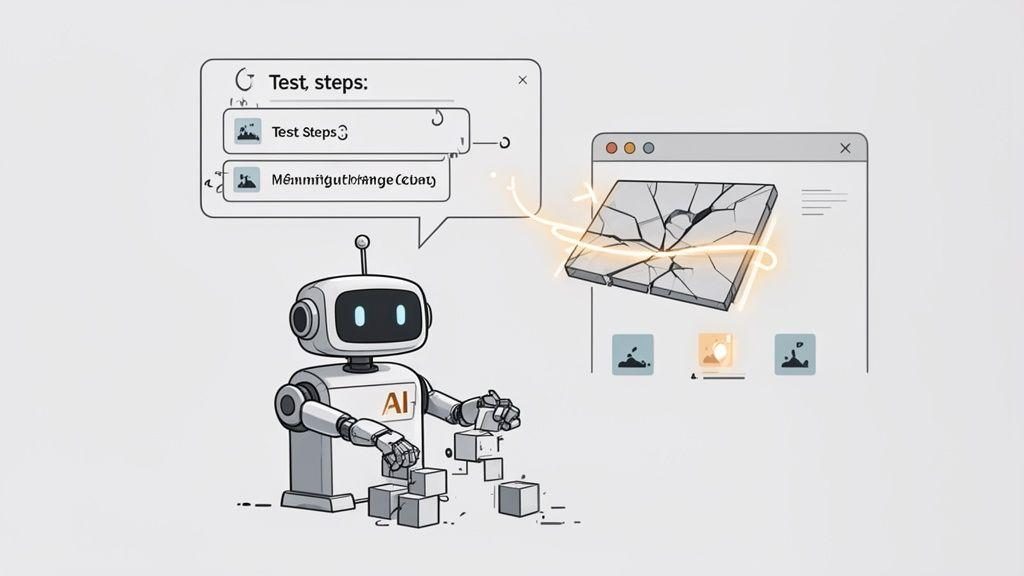
Thanks to Artificial Intelligence, No-Code Test Automation is changing how modern QA teams build and execute automated tests.
Instead of focusing on programming languages, AI allows testers to describe what they want to validate in plain English.
The AI handles the execution.
This shift is making automation more accessible than ever before.
---
Why Traditional Automation Isn't Easy for Everyone
Frameworks like Selenium and Playwright are incredibly powerful.
They give engineers complete control over browser interactions.
But that power comes with complexity.
Before a single test executes, teams often need to:
- Choose a programming language
- Configure automation frameworks
- Manage dependencies
- Handle browser drivers
- Maintain selectors
- Debug failing scripts
- Update automation after UI changes
For experienced automation engineers, these tasks become routine.
For many functional testers, however, they create a steep learning curve.
The result?
Automation becomes concentrated in the hands of a small number of specialists.
---
What Is No-Code Test Automation?
No-Code Test Automation allows QA teams to automate software testing without writing traditional automation scripts.
Instead of creating code, testers describe scenarios such as:
- Verify user registration.
- Test checkout with a discount coupon.
- Confirm login works.
- Validate search functionality.
- Check password reset.
The testing platform interprets these instructions and performs the workflow automatically.
Modern AI makes this process increasingly reliable and adaptable.
---
Why AI Is Making No-Code Testing Practical
Earlier no-code platforms relied heavily on drag-and-drop interfaces and recorded user actions.
While useful, they often struggled when applications changed.
AI introduces a more intelligent approach.
Rather than memorizing every click, AI understands the goal of the test.
That means minor interface updates don't necessarily require rebuilding automation.
Instead, the AI adapts to changing applications while continuing to validate business workflows.
---
Benefits of No-Code Test Automation
Modern QA teams are adopting no-code testing because it offers several advantages.
Faster Automation
Test scenarios can often be created in minutes instead of hours.
---
Lower Maintenance
AI reduces the effort required to keep automation working after UI updates.
---
Better Collaboration
Developers, testers, product managers, and business analysts can understand the same testing scenarios.
---
Greater Test Coverage
Teams can automate more workflows without dramatically increasing engineering effort.
---
Faster Releases
More automation means faster feedback and greater confidence before deployment.
---
When Traditional Automation Still Makes Sense
No-code testing isn't designed to replace every automation framework.
There are situations where traditional scripting remains valuable.
Examples include:
- Complex API automation
- Custom framework development
- Highly specialized validations
- Performance engineering
- Low-level browser interactions
Many organizations will continue using Selenium and Playwright alongside AI-powered no-code testing.
The goal isn't replacement.
It's choosing the right tool for the right job.
---
How RoboQA Simplifies No-Code Testing
RoboQA was built around a simple idea.
Testing should focus on business outcomes—not browser scripts.
Instead of writing automation code, QA teams describe what they want to verify.
Examples include:
- Verify checkout works.
- Test user registration.
- Validate responsive navigation.
- Confirm dashboard functionality.
- Test product search.
The AI executes the workflow, captures evidence, identifies issues, and generates detailed reports.
This allows engineering teams to spend less time maintaining automation and more time improving software quality.
---
The Future of Software Testing
Software testing is becoming more collaborative.
Quality is no longer owned by a single team.
Developers.
Product managers.
Business analysts.
QA engineers.
Everyone contributes.
AI-powered no-code testing makes that collaboration easier because the testing language becomes understandable to everyone.
Instead of reading automation code, teams discuss business scenarios.
That shift has the potential to transform how software quality is delivered.
---
Final Thoughts
No-Code Test Automation isn't about removing engineering expertise.
It's about removing unnecessary complexity.
As AI continues evolving, more organizations will automate testing using natural language instead of traditional scripting.
The future isn't less automation.
It's automation that everyone can understand.
FAQ
Frequently Asked Questions
What is No-Code Test Automation?
No-Code Test Automation allows teams to automate software testing without writing traditional programming scripts.
---
Is No-Code Testing replacing Selenium?
No.
Many organizations use No-Code AI testing alongside Selenium and Playwright depending on project requirements.
---
Can non-programmers automate testing?
Yes.
Modern AI platforms allow testers to describe workflows in natural language while the AI performs browser automation.
---
Does No-Code Testing support regression testing?
Yes.
Most modern AI testing platforms allow teams to automate regression scenarios without creating traditional automation frameworks.
---
How does RoboQA help?
RoboQA enables QA teams to automate browser testing using AI-powered natural language workflows instead of writing complex automation scripts.
RoboQA CTA
Automate Testing Without Writing Complex Scripts
Why spend weeks building automation frameworks when AI can execute browser testing from simple natural language instructions?
RoboQA helps QA teams automate regression testing, browser testing, and end-to-end workflows using intelligent AI-powered automation.
Spend less time scripting—and more time improving software quality.