Best AI Test Automation Tools in 2026: A Complete Guide for QA Teams
Software testing is changing faster than ever.
Not long ago, automation meant writing hundreds of Selenium scripts, maintaining complex frameworks, and constantly fixing broken tests after every UI update.
Today, Artificial Intelligence is changing that workflow.
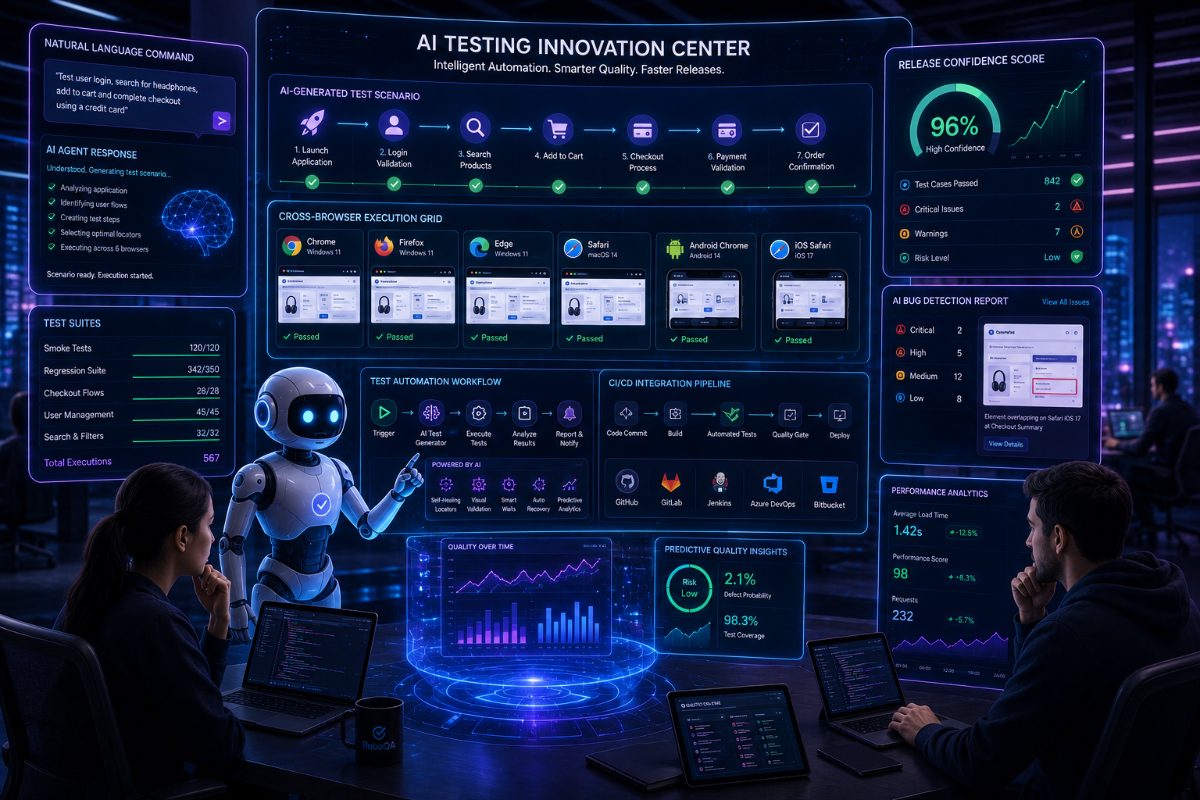
Instead of writing instructions for every click and every validation, QA teams can now describe what they want to test and allow AI to execute the workflow automatically.
This shift has created a new generation of AI-powered testing tools designed to reduce maintenance, increase testing coverage, and accelerate software delivery.
In this guide, we'll explore why AI testing is growing rapidly, what features modern QA teams should look for, and how AI-powered tools are transforming browser automation.
---
Why Traditional Test Automation Is Becoming Harder
Automation frameworks such as Selenium and Playwright remain powerful.
They give engineering teams complete control over browser interactions.
However, that flexibility comes with responsibility.
Automation engineers spend significant time:
- Writing scripts
- Maintaining frameworks
- Updating selectors
- Debugging flaky tests
- Supporting multiple browsers
- Managing test environments
As applications evolve, maintaining automation often becomes more expensive than creating it.
This maintenance burden is one of the biggest reasons organizations are exploring AI-powered testing solutions.
---
What Makes AI Testing Different?
Traditional automation answers one question:
"How should the browser perform this action?"
AI answers a different question:
"What business outcome are we trying to validate?"
Instead of scripting every interaction, teams describe the goal.
Examples include:
- Verify user registration works.
- Test checkout using a discount code.
- Confirm dashboard loads correctly.
- Validate password reset.
- Check responsive navigation.
The AI agent interprets these objectives, executes browser workflows, detects issues, captures evidence, and generates detailed reports.
The result is less scripting and more focus on software quality.
---
Features Every AI Test Automation Tool Should Offer
Choosing an AI testing platform isn't only about automation.
It should help engineering teams release software faster while reducing repetitive work.
Key capabilities include:
Natural Language Test Creation
Engineers should be able to describe scenarios using plain English instead of writing extensive automation scripts.
---
Browser Automation
The platform should automatically interact with modern web applications just like a real user.
---
Visual Validation
AI should detect UI inconsistencies, broken layouts, and rendering issues before customers notice them.
---
End-to-End Testing
Support for complete user journeys such as:
- Login
- Registration
- Checkout
- Search
- Dashboard navigation
- Profile management
---
Regression Testing
Automatically verify that existing functionality continues working after every release.
---
Detailed Reports
Screenshots.
Execution logs.
Failure summaries.
Bug evidence.
Performance metrics.
Engineering teams need actionable insights—not just pass or fail results.
---
Why AI Matters More in 2026
Software delivery has accelerated dramatically.
Many organizations deploy code several times every day.
Testing must keep pace.
Manual testing cannot scale indefinitely.
Traditional automation requires continuous maintenance.
AI-powered testing helps teams reduce repetitive effort while increasing confidence before deployment.
Rather than replacing QA engineers, AI amplifies their productivity by handling repetitive execution.
---
How RoboQA Approaches AI Testing
RoboQA is designed to simplify browser testing using AI-powered automation.
Instead of building complex automation frameworks, teams describe the workflow they want to validate.
Examples include:
- Test checkout.
- Verify login.
- Validate responsive navigation.
- Check registration flow.
- Test search functionality.
The AI agent executes these workflows, captures screenshots, identifies issues, and generates detailed reports.
This allows engineering teams to focus more on improving software quality and less on maintaining automation.
---
Choosing the Right Tool
Every organization has different requirements.
Some teams require extensive scripting flexibility.
Others prioritize speed, maintainability, and faster release cycles.
The best AI testing platforms reduce repetitive work while giving engineers greater confidence in every deployment.
As AI continues evolving, software testing is becoming less about writing automation—and more about defining quality objectives.
---
Final Thoughts
AI-powered test automation is no longer an experimental technology.
It's quickly becoming a standard part of modern software engineering.
Organizations that adopt intelligent browser automation today will be better prepared for increasingly complex applications, faster release cycles, and growing customer expectations.
The future of software testing isn't simply automated.
It's intelligent.
FAQ
Frequently Asked Questions
What are AI Test Automation Tools?
AI Test Automation Tools use artificial intelligence to automate browser testing, detect issues, execute workflows, and reduce the need for traditional scripted automation.
---
How is AI Testing different from Selenium?
Selenium requires engineers to write and maintain automation scripts. AI testing allows teams to describe business scenarios while AI handles workflow execution and reporting.
---
Are AI Testing Tools replacing QA Engineers?
No.
AI removes repetitive execution while QA engineers continue making quality decisions, designing test strategies, and investigating complex issues.
---
Can AI automate regression testing?
Yes.
Modern AI testing platforms can automatically execute regression scenarios after application changes and identify failures before release.
---
How does RoboQA help?
RoboQA enables teams to test websites using AI-powered browser automation. Engineers describe scenarios in natural language, and the AI executes workflows while generating detailed reports.
RoboQA
Test Smarter with AI
Traditional automation shouldn't slow your releases.
RoboQA helps QA teams automate browser testing using AI-powered workflows, natural language scenarios, intelligent bug detection, and detailed reporting.
Spend less time maintaining automation—and more time building better software.
Start testing with RoboQA today.