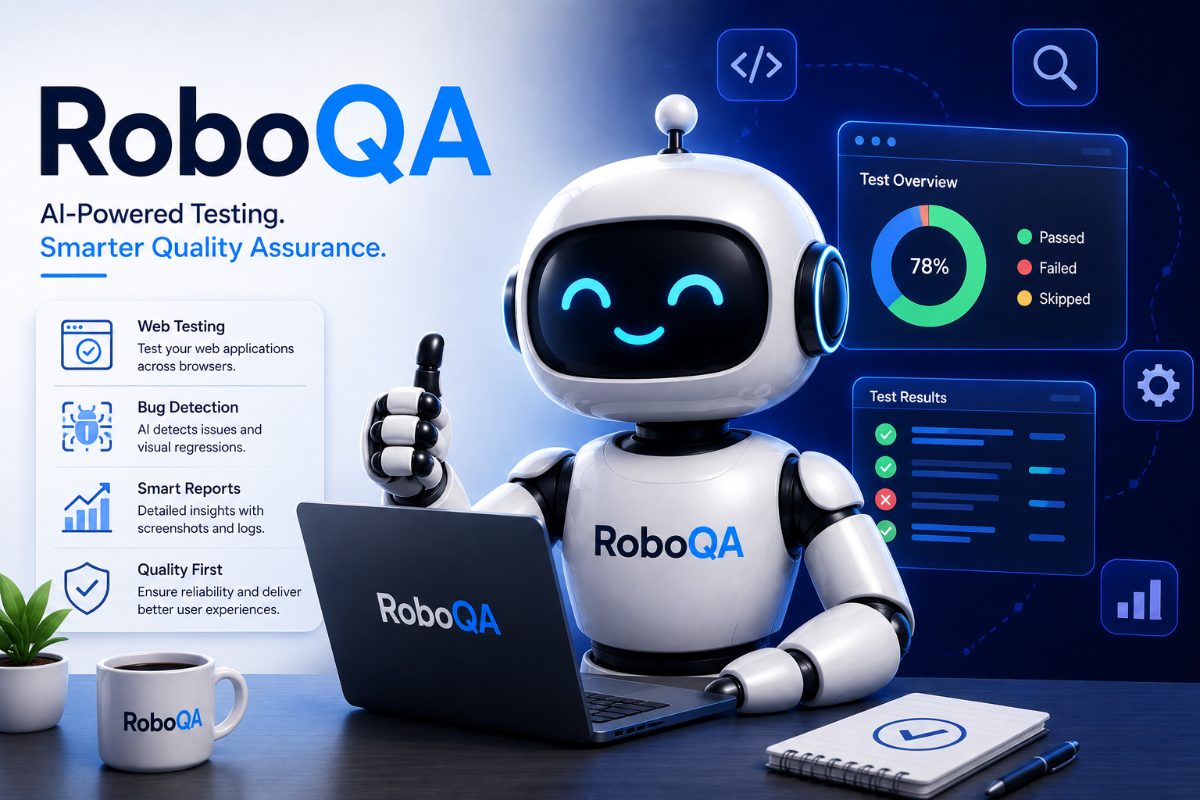
Software testing is undergoing one of the biggest transformations in its history. For years, quality assurance teams have relied on manual testing, scripted automation, and large regression suites to maintain software quality. While these approaches have served organizations well, modern applications are becoming increasingly complex, making traditional testing methods slower, more expensive, and harder to maintain.
In 2026, intelligent testing systems powered by artificial intelligence are changing the way teams approach quality assurance. Instead of spending hours creating and maintaining test scripts, teams can now describe what they want to test in natural language and allow AI-powered systems to execute, analyze, and report results automatically.
This shift is not simply about automation. It is about creating testing systems that understand applications, adapt to changes, and continuously improve testing coverage without constant human intervention.
---
The Growing Challenges of Traditional QA
Modern applications are released faster than ever before. Development teams deploy new features weekly, daily, and sometimes multiple times a day.
Traditional testing struggles to keep up because:
- Manual testing requires significant time and effort.
- Automation scripts frequently break after UI changes.
- Regression suites become larger and slower over time.
- Maintaining test cases consumes valuable engineering resources.
- Testing often becomes a bottleneck before releases.
As applications scale, QA teams spend more time maintaining tests than discovering new defects.
This is where intelligent testing systems provide a significant advantage.
---
What Are Intelligent Testing Systems?
Intelligent testing systems use artificial intelligence to automate the entire testing lifecycle.
Instead of relying solely on predefined scripts, these systems can:
- Understand testing objectives.
- Generate test scenarios automatically.
- Execute browser actions autonomously.
- Detect UI and functional issues.
- Analyze failures.
- Produce detailed reports.
- Learn from previous executions.
The result is a testing process that becomes faster, smarter, and more scalable over time.
---
How AI Is Transforming Software Testing
1. Natural Language Testing
One of the biggest improvements introduced by AI is the ability to create tests using natural language.
Instead of writing code, testers can simply describe a feature:
"Verify that users can log in and access their dashboard."
The AI system translates this requirement into executable browser actions and validates the expected behavior.
This dramatically lowers the barrier to automation.
---
2. Autonomous Test Execution
Traditional automation follows fixed instructions.
Intelligent testing systems can make decisions during execution.
For example:
- Detect unexpected popups.
- Handle dynamic content.
- Adapt to UI changes.
- Retry failed actions intelligently.
- Explore multiple user paths.
This flexibility allows testing to continue even when applications evolve.
---
3. Visual Bug Detection
Modern AI systems are capable of understanding user interfaces visually.
They can identify:
- Layout issues.
- Missing elements.
- Broken images.
- Visual inconsistencies.
- Responsive design problems.
This enables teams to detect issues that traditional automation often misses.
---
4. Automated Test Generation
Creating comprehensive test coverage manually is time-consuming.
AI can analyze an application and generate:
- Functional test cases.
- Edge-case scenarios.
- User journey tests.
- Regression tests.
- Validation checks.
This helps teams increase coverage without increasing effort.
---
Benefits for QA Teams
Organizations adopting intelligent testing systems are experiencing several benefits:
Faster Releases
Testing cycles become significantly shorter because AI handles repetitive validation tasks automatically.
Lower Maintenance Costs
Self-adapting testing systems reduce the need for constant script updates.
Improved Coverage
AI can generate and execute more test scenarios than traditional manual processes.
Better Bug Detection
Intelligent systems can identify issues across functionality, usability, performance, and visual design.
Enhanced Productivity
QA engineers spend less time executing repetitive tests and more time focusing on quality strategy.
---
The Future of QA Engineers
A common concern is whether AI will replace QA professionals.
The reality is different.
AI is changing the responsibilities of QA engineers rather than eliminating them.
Future QA professionals will focus on:
- Quality strategy.
- Risk analysis.
- User experience validation.
- Test architecture.
- AI supervision.
- Product quality leadership.
Instead of writing hundreds of automation scripts, testers will guide intelligent systems and ensure they deliver reliable results.
---
Intelligent Testing Platforms Are Becoming Essential
As software development accelerates, organizations need testing solutions that can scale alongside their applications.
Modern AI-powered platforms are helping teams:
- Test faster.
- Release with confidence.
- Reduce maintenance effort.
- Improve software quality.
- Increase testing efficiency.
The companies that adopt intelligent testing systems today will gain a significant competitive advantage as software complexity continues to grow.
---
Conclusion
Software testing in 2026 is no longer limited to manual execution and fragile automation scripts. Intelligent testing systems are transforming quality assurance by combining automation, artificial intelligence, and autonomous decision-making.
As organizations continue to accelerate software delivery, AI-powered testing will become a core part of modern development workflows.
The future of QA is not about replacing testers. It is about empowering them with intelligent tools that make software testing faster, smarter, and more effective than ever before.